
Regular commercial kitchen hood cleaning helps restaurants reduce grease-related fire hazards, maintain cleaner exhaust systems, support inspection readiness, and improve working conditions.
Understanding the benefits of regular hood cleaning helps restaurant owners protect their operations and avoid unnecessary maintenance problems.
Quick Answer: What Are the Benefits of Regular Hood Cleaning?
The seven main benefits are:
- Reduced grease-related fire hazards
- Better preparation for fire-safety inspections
- Improved kitchen ventilation
- Reduced grease-related odors
- Better exhaust equipment maintenance
- Fewer unexpected cleaning disruptions
- Improved restaurant maintenance management
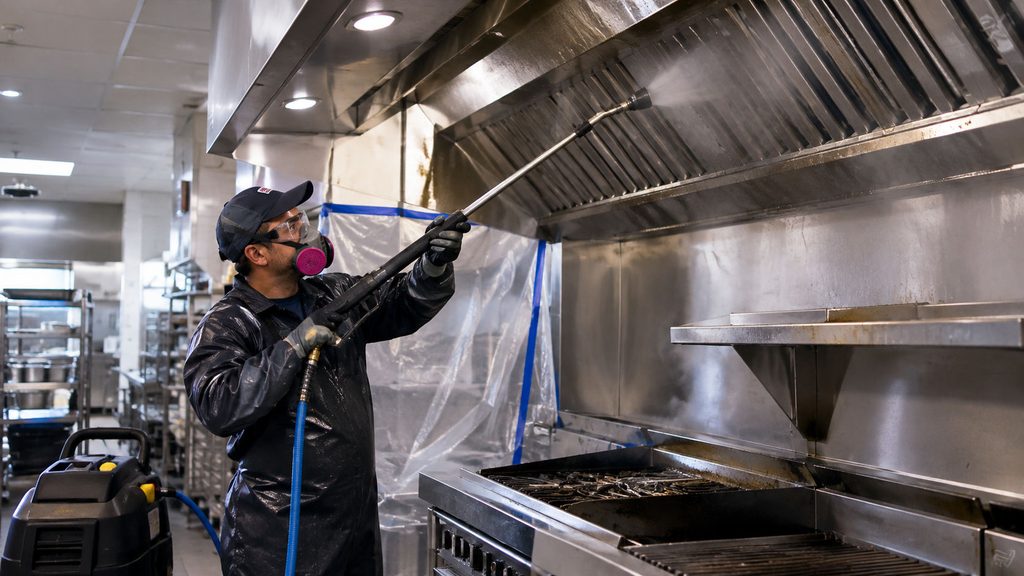
Professional cleaning addresses grease throughout accessible portions of the exhaust system, including the hood, filters, plenum, ductwork, and exhaust fan.
1. Regular Hood Cleaning Helps Reduce Fire Risk
One of the most important restaurant hood cleaning benefits is reducing accumulated grease.
Commercial cooking produces grease-laden vapors that travel through the exhaust system. Over time, combustible grease accumulates inside filters, plenums, ducts, and fans, increasing potential fire hazards.
Professional cleaning removes these deposits from accessible areas.
Restaurants using fryers, charbroilers, grills, or other high-volume cooking equipment may require more frequent cleaning because of higher grease production.
2. Supports NFPA 96 Compliance and Inspection Readiness
NFPA 96, the Standard for Ventilation Control and Fire Protection of Commercial Cooking Operations, addresses commercial kitchen ventilation, inspection, maintenance, and cleaning requirements.
Regular hood cleaning supports:
- Organized maintenance records
- Cleaning documentation
- Inspection preparation
- Identification of system deficiencies
- Consistent maintenance scheduling
However, cleaning alone does not guarantee compliance. Requirements depend on the system and the applicable Authority Having Jurisdiction (AHJ).
Restaurant managers should retain service reports, cleaning dates, photographs, and recommended corrective actions.
3. Helps Maintain Better Kitchen Ventilation
Commercial exhaust systems remove cooking-related smoke, heat, steam, and grease-laden vapors.
Excessive grease accumulation can restrict airflow and affect ventilation performance.
Regular cleaning helps maintain cleaner exhaust pathways and may improve airflow when grease buildup is contributing to restrictions.
Potential benefits include better smoke capture, improved working conditions, reduced odors, and better visibility around cooking equipment.
Hood cleaning does not replace mechanical repairs or ventilation balancing.
4. Helps Reduce Grease-Related Kitchen Odors
Grease deposits inside hoods, filters, and exhaust components can retain cooking residue and contribute to persistent odors.
Professional cleaning removes accumulated grease that may contribute to these smells.
Combined with daily cleaning and appropriate ventilation maintenance, regular hood service supports a cleaner restaurant environment.
5. Supports Exhaust Equipment Maintenance
Commercial kitchen exhaust systems contain components requiring regular attention, including:
- Grease filters
- Exhaust fans and housings
- Ductwork
- Grease collection components
- Access panels
Heavy grease accumulation makes maintenance more difficult.
Professional cleaning also creates opportunities to identify damaged filters, inaccessible ducts, loose components, or unusual grease deposits.
These findings help managers schedule repairs before problems become more disruptive.
6. Reduces Unexpected Cleaning Disruptions
Waiting until grease drips, odors increase, or inspection concerns arise can make maintenance difficult to coordinate.
A recurring cleaning schedule helps restaurants:
- Schedule service outside operating hours
- Coordinate kitchen shutdowns
- Prepare employees
- Budget for maintenance
- Reduce unexpected deep-cleaning needs
Although scheduled maintenance cannot eliminate every problem, it makes cleaning requirements more predictable.
7. Improves Restaurant Maintenance Management
One of the most practical benefits of regular hood cleaning for restaurants is better maintenance organization.
Instead of relying on emergency cleaning, managers can follow a documented process:
Inspect System → Schedule Cleaning → Document Work → Address Deficiencies → Plan Next Service
This approach supports consistent records, recurring maintenance, and earlier identification of exhaust-system concerns.
How Often Should Restaurants Schedule Hood Cleaning?
Cleaning frequency depends on cooking volume, grease accumulation, fuel type, inspection findings, and local requirements.
A commonly referenced NFPA 96 inspection framework includes:
| Cooking Operation | Typical Inspection Frequency |
| Solid-fuel cooking | Monthly |
| High-volume cooking | Quarterly |
| Moderate-volume cooking | Semiannually |
| Low-volume cooking | Annually |
Important: These are inspection intervals, not automatic cleaning schedules. Actual cleaning requirements depend on system condition and applicable regulations.
About Chris Daskalakis
Chris Daskalakis is the founder of MFS Trade School and an entrepreneur focused on helping individuals build businesses in the commercial kitchen exhaust cleaning industry. Through MFS Trade School, Chris helps aspiring entrepreneurs and existing service-business owners develop the technical knowledge and business fundamentals needed to enter the kitchen exhaust hood cleaning industry.
Frequently Asked Questions
What are the biggest benefits of regular hood cleaning?
Regular hood cleaning helps reduce grease-related fire hazards, supports inspection readiness, maintains cleaner exhaust pathways, reduces odors