
A restaurant fire inspection checklist helps restaurant owners identify fire hazards, organize required documentation, and prepare their commercial kitchen before a fire inspector arrives. From kitchen exhaust systems and fire suppression equipment to emergency exits, electrical panels, and extinguishers, every part of the restaurant should be inspection-ready
Commercial kitchens face unique fire risks because they combine high temperatures, cooking oils, grease-laden vapors, open flames, gas, electricity, and combustible materials.
Using a restaurant fire inspection checklist regularly can help restaurant owners improve fire safety, identify potential problems before an inspection, and support compliance with applicable local fire codes.
Quick Answer: What Should Be on a Restaurant Fire Inspection Checklist?
A restaurant fire inspection checklist should cover the kitchen hood and exhaust system, fire suppression equipment, fire extinguishers, emergency exits, electrical panels, fire alarms, sprinkler systems, storage areas, documentation, and staff emergency preparedness.
Before the fire inspector arrives, restaurant owners should confirm that:
- Hood cleaning and fire suppression service records are current.
- Grease filters and exhaust components are properly maintained.
- Fire extinguishers are accessible and have current service tags.
- Exit doors and evacuation routes are clear.
- Exit signs and emergency lighting are operational.
- Electrical panels are unobstructed.
- Storage areas are organized and free of obvious fire hazards.
- Fire alarm and sprinkler documentation is available.
- Employees understand basic emergency procedures.
Fire inspection requirements can vary by jurisdiction. Restaurant owners should always confirm applicable requirements with their local fire marshal or Authority Having Jurisdiction (AHJ).
Why a Restaurant Fire Inspection Checklist Matters
Fire inspection preparation should be part of routine restaurant operations rather than something completed only when an inspection is approaching.
Commercial kitchens can accumulate grease inside filters, exhaust hoods, ductwork, exhaust fans, and other components of the kitchen exhaust system.
When combustible grease deposits are present, a cooking fire can potentially spread beyond the cooking surface and into the exhaust system.
A comprehensive restaurant fire inspection checklist helps restaurant owners routinely evaluate areas related to:
- Kitchen fire prevention
- Grease accumulation
- Commercial kitchen exhaust maintenance
- Emergency evacuation
- Fire suppression
- Fire extinguisher accessibility
- Electrical safety
- Storage practices
- Inspection documentation
- Employee preparedness
Consistent preparation can make inspections more efficient while supporting a safer restaurant environment.
1. Organize Your Fire Safety Records
Start your restaurant fire inspection checklist by reviewing the documentation associated with fire protection and kitchen maintenance.
Keep applicable records organized in a clearly labeled binder or digital folder.
Documents may include:
- Kitchen hood cleaning reports
- Fire suppression inspection reports
- Fire extinguisher service records
- Fire alarm testing documents
- Sprinkler inspection reports
- Emergency lighting test records
- Employee safety training records
- Repair invoices
- Equipment permits, when applicable
- Evacuation drill records
Compare equipment inspection tags and service stickers with the dates shown in your records.
Missing documentation, expired service tags, or inconsistent dates can create unnecessary complications during a restaurant fire inspection.
Keeping records organized throughout the year is easier than trying to locate everything immediately before an inspector arrives.
2. Inspect the Kitchen Hood and Exhaust System
The commercial kitchen exhaust system is one of the most important areas to review before a restaurant fire inspection.
Grease can accumulate throughout the system, including the:
- Hood canopy
- Grease filters
- Exhaust ducts
- Access panels
- Exhaust fan
- Fan housing
- Rooftop components
- Grease containment system
As part of your restaurant fire inspection checklist, verify that:
- Grease filters are properly installed.
- Filters do not have excessive grease accumulation.
- The hood does not have visible or dripping grease.
- Accessible components appear properly maintained.
- Access panels are secure.
- Exhaust fans are operating normally.
- Professional cleaning documentation is available.
- Service stickers or labels are current when applicable.
- Cooking appliances remain positioned under the protected hood area.
- Combustible supplies are not stored close to cooking equipment.
Restaurants should also evaluate whether their kitchen exhaust system is being inspected and cleaned at an appropriate frequency.
Cooking volume, cooking methods, fuel type, grease production, system condition, and local requirements can all influence how frequently professional service is necessary.
For additional information, restaurant owners should review applicable kitchen hood cleaning requirements and NFPA 96 guidance.
3. Check the Fire Suppression System
Commercial cooking operations commonly use automatic fire suppression systems designed to protect cooking appliances and associated hazards.
Before the inspector arrives, check visible components and service documentation.
Review:
- Whether the inspection or service tag is current
- Whether the manual pull station is visible
- Whether the pull station is accessible
- Whether suppression nozzles appear properly positioned
- Whether nozzle caps are present
- Whether shelving or stored supplies interfere with system components
- Whether applicable service documentation is available
Restaurant employees should not modify, relocate, or attempt to service fire suppression components themselves.
Pay particular attention when cooking equipment has been moved or replaced.
Moving fryers, ranges, grills, or other appliances can potentially affect the relationship between the cooking equipment and the fire suppression system.
If equipment has been changed or relocated, have the system evaluated by a qualified fire suppression professional.
4. Review Fire Extinguishers
Fire extinguishers are another important component of a restaurant fire inspection checklist.
Check extinguishers throughout the facility for:
- Current service or inspection tags
- Proper mounting
- Clear accessibility
- Visible operating instructions
- Obvious physical damage
- Missing components
- Corrosion or leakage
- Appropriate placement
Commercial kitchens may require a Class K fire extinguisher for hazards associated with cooking oils and fats.
Employees should know where applicable fire extinguishers are located and understand the restaurant’s established emergency procedures.
Fire extinguishers should never be hidden behind boxes, furniture, equipment, decorations, or stored supplies.
5. Clear Emergency Exits, Doors, and Walkways
Emergency exits and evacuation routes should remain accessible during normal business operations.
Do not wait until inspection day to remove obstructions.
Walk through the restaurant and verify that:
- Exit doors can be opened as required.
- Exit signs are visible.
- Emergency lighting appears operational.
- Hallways remain clear.
- Stairways are unobstructed.
- Boxes and equipment do not block evacuation routes.
- Exterior exit paths are clear.
- Required dining room aisles remain accessible.
- Emergency doors are not improperly secured during occupied hours.
Blocked exits can create serious life-safety hazards during an emergency.
Make exit-route inspections part of the restaurant’s routine opening or closing procedures.
6. Check Electrical Safety
Restaurants rely heavily on electrical equipment, including refrigerators, freezers, ovens, warming equipment, mixers, beverage machines, point-of-sale systems, lighting, and other devices.
Your restaurant fire inspection checklist should include a basic visual review of electrical safety conditions.
Check that:
- Electrical panels are accessible.
- Required clearance around electrical equipment is maintained.
- Nothing is stored directly in front of electrical panels.
- Panel doors close properly.
- Electrical cords do not show obvious damage.
- Extension cords are not being used as a substitute for permanent wiring.
- Power strips are not visibly overloaded.
- Wiring is not exposed.
- Cords do not create obvious trip or damage hazards.
Electrical problems should be evaluated by a qualified professional.
Warm outlets, repeatedly tripping breakers, unusual odors, buzzing equipment, damaged wiring, or other electrical abnormalities should not be ignored.
7. Review Storage and Housekeeping
Good housekeeping can reduce combustible materials and make important fire protection equipment easier to access.
Inspect:
- Storage rooms
- Utility spaces
- Employee areas
- Trash areas
- Mechanical rooms
- Areas surrounding cooking equipment
- Electrical rooms
- Rooftop service areas when applicable
Look for potential problems such as:
- Cardboard stored near heat sources
- Improperly stored greasy materials
- Excessive trash accumulation
- Chemicals stored near ignition sources
- Storage interfering with sprinkler protection
- Clutter surrounding mechanical equipment
- Supplies blocking electrical equipment
- Obstructed fire protection equipment
A clean, organized restaurant is easier to inspect and helps make fire safety part of routine operations.
8. Check Fire Alarms and Sprinkler Systems
Fire alarms and sprinkler systems should also be included in your restaurant fire inspection checklist when they are present in the facility.
For fire alarm systems, verify that:
- Required testing or service documentation is available.
- Manual pull stations are accessible.
- Alarm devices are not visibly obstructed.
- The control panel does not display an obvious trouble condition.
- Managers know the restaurant’s procedures when an alarm activates.
For sprinkler systems, visually check that:
- Inspection documentation is available.
- Sprinkler heads are not visibly damaged.
- Sprinkler heads have not been painted or covered.
- Stored materials do not obviously interfere with sprinkler protection.
- Control equipment remains accessible.
- The fire department connection is not obstructed.
Do not hang decorations, wires, clothing, signs, or other objects from sprinkler heads or sprinkler piping.
Questions involving sprinkler clearance, testing, or system condition should be addressed by qualified fire protection professionals.
9. Prepare Your Restaurant Staff
A successful fire safety program depends on more than equipment.
Employees should understand the restaurant’s basic emergency procedures and know where critical safety equipment is located.
Before an inspection, review:
- Fire extinguisher locations
- Class K extinguisher location
- Fire suppression manual pull station location
- Emergency exit routes
- Internal procedures for reporting a fire
- Guest evacuation procedures
- Who is responsible for communicating with inspectors
- Where fire safety documentation is stored
Designate a manager who can accompany the inspector and provide access to appropriate records, equipment areas, and rooms.
Regular staff preparation can also help employees respond more effectively if an actual emergency occurs.
Common Restaurant Fire Inspection Violations to Look For
One of the most useful ways to use a restaurant fire inspection checklist is to identify potential problems before an inspector does.
Issues that restaurant operators should watch for include:
- Expired fire extinguisher service tags
- Excessive grease accumulation
- Dirty grease filters
- Missing hood cleaning documentation
- Blocked exits
- Obstructed evacuation routes
- Blocked electrical panels
- Cooking appliances moved from their intended locations
- Missing fire suppression service documentation
- Storage interfering with fire protection equipment
- Unresolved fire alarm trouble conditions
- Poor housekeeping around heat-producing equipment
Actual violations and enforcement requirements vary by jurisdiction.
Restaurant owners should consult their local fire marshal or AHJ when they are uncertain about a particular requirement.
Restaurant Fire Inspection Checklist Before the Inspector Arrives
Use this condensed checklist as a final review:
- Hood and exhaust system visually inspected
- Grease filters properly maintained
- Professional hood cleaning records available
- Fire suppression documentation current
- Manual suppression pull station accessible
- Fire extinguishers accessible
- Class K extinguisher available where required
- Fire extinguisher service tags reviewed
- Exit doors unobstructed
- Exit signs visible
- Emergency lighting checked
- Hallways and evacuation routes clear
- Electrical panels accessible
- Damaged electrical cords addressed
- Storage areas organized
- Combustible materials controlled
- Fire alarm records available
- Sprinkler documentation available
- Fire protection equipment unobstructed
- Staff emergency procedures reviewed
- Manager prepared to meet the inspector
- Fire safety records organized and accessible
Frequently Asked Questions
What does a fire inspector check in a restaurant?
A restaurant fire inspector may evaluate kitchen exhaust systems, fire suppression equipment, extinguishers, emergency exits, electrical safety conditions, alarms, sprinklers, storage practices, fire protection equipment, and maintenance documentation.
Specific inspection requirements vary by jurisdiction.
How should a restaurant prepare for a fire inspection?
Use a restaurant fire inspection checklist to review the kitchen exhaust system, organize service records, verify fire extinguisher accessibility, clear emergency exits, check electrical panels, review fire suppression equipment, inspect storage areas, and prepare employees.
What are common restaurant fire inspection requirements?
Requirements vary by jurisdiction but can involve commercial kitchen exhaust systems, fire suppression equipment, fire extinguishers, emergency exits, alarms, sprinklers, electrical safety, storage, and required service documentation.
Always verify specific requirements with the local fire marshal or Authority Having Jurisdiction.
Does a clean kitchen hood mean the exhaust system is compliant?
Not necessarily.
A visible hood canopy can appear clean while grease remains elsewhere in the exhaust system, including ductwork, exhaust fans, or other components.
The complete kitchen exhaust system should be evaluated and maintained appropriately.
How often should restaurant hood systems be cleaned?
The appropriate frequency depends on cooking volume, cooking methods, fuel type, grease production, inspection findings, system condition, and applicable local requirements.
Restaurants should follow the inspection and maintenance requirements applicable to their jurisdiction.
Who should clean a commercial kitchen exhaust system?
Restaurant employees can perform appropriate routine cleaning of accessible surfaces and removable components.
Professional cleaning of the broader commercial kitchen exhaust system should be performed by properly trained and qualified kitchen exhaust cleaning professionals.
What should I do if I find a problem before the fire inspection?
Do not hide or temporarily cover the issue.
Determine what corrective action is required and contact the appropriate qualified professional when necessary, such as a kitchen exhaust cleaner, fire suppression contractor, electrician, or other licensed service provider.
Final Thoughts
Using a restaurant fire inspection checklist throughout the year can help restaurant owners identify potential hazards before they become violations, equipment problems, or dangerous emergencies.
The most effective approach is to make fire safety part of routine restaurant operations.
Regularly review:
- Grease control
- Kitchen exhaust maintenance
- Fire suppression equipment
- Fire extinguishers
- Emergency exits
- Electrical safety
- Storage and housekeeping
- Fire alarms and sprinklers
- Safety documentation
- Staff preparedness
Ready to Turn Kitchen Exhaust Cleaning Into a Business?
Restaurant fire inspections highlight just how important properly maintained commercial kitchen exhaust systems are. Behind that need is a specialized service industry that requires trained professionals who understand how to properly clean kitchen exhaust systems and work within NFPA 96 compliance requirements.
If you’re interested in starting a kitchen exhaust hood cleaning business—or adding this service to an existing pressure washing, commercial cleaning, or restaurant service company—MFS Trade School can help you learn the trade and build the business behind it.
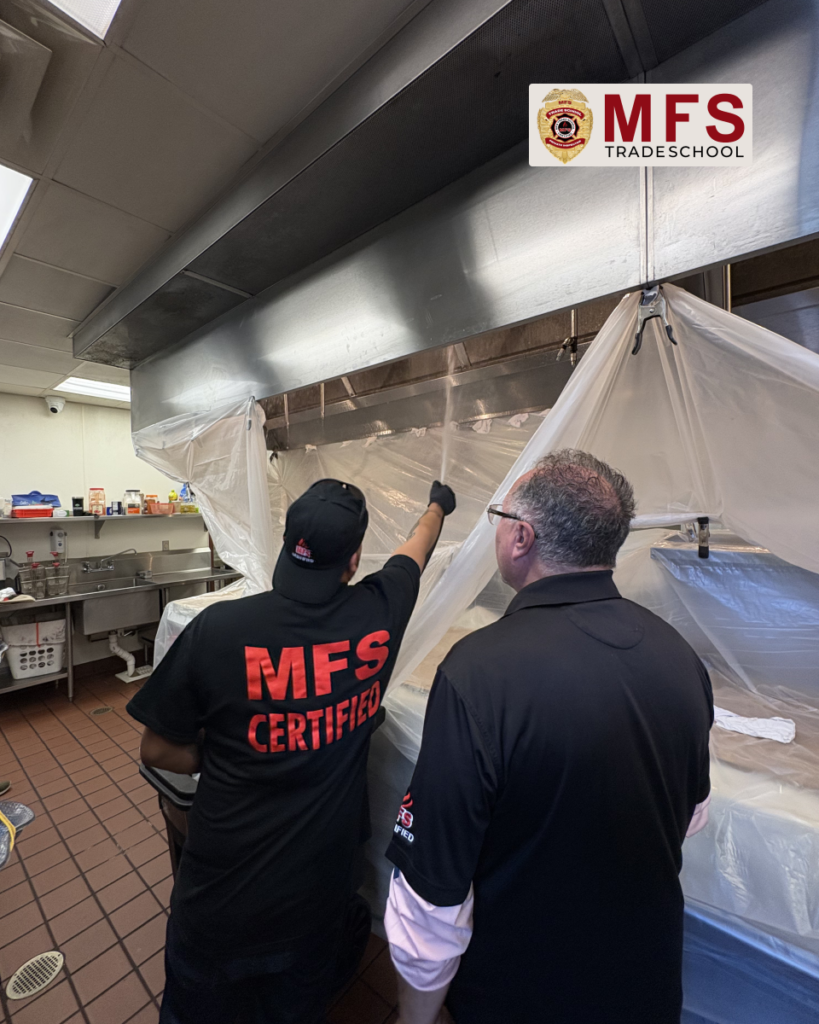
The Kitchen Exhaust Hood Cleaning Certification program combines professional instruction with hands-on training covering commercial kitchen exhaust cleaning procedures, equipment, safety, NFPA 96 compliance requirements, job estimating, pricing, and business development.
Turn restaurant fire-safety demand into a professional service business.
Explore MFS Trade School’s Kitchen Exhaust Hood Cleaning Certification →
An inspection-ready restaurant is better positioned to protect employees, customers, property, and business operations.
Restaurant owners looking for qualified kitchen exhaust cleaning professionals can use the National Hood Cleaners Association to learn more about commercial kitchen exhaust maintenance, NFPA 96 requirements, and professional hood cleaning services.
For additional guidance, review our resources about kitchen hood cleaning requirements, restaurant exhaust hood cleaning schedules, and commercial kitchen fire safety.