
Commercial kitchen fires cause thousands of restaurant closures, property losses, and business interruptions every year. For restaurant owners, understanding NFPA 96 is one of the most important steps toward protecting employees, customers, property, and business operations.
If you have ever asked, “What is NFPA 96 and why does it matter to restaurant owners?”, the answer is straightforward:
NFPA 96 is the National Fire Protection Association that writes the fire codes on how commercial kitchen exhaust systems must be installed, inspected, maintained, and cleaned to reduce fire risks in commercial cooking operations.
Compliance with NFPA 96 helps restaurants:
- Reduce fire hazards.
- Pass fire inspections.
- Maintain insurance coverage.
- Avoid costly violations.
- Protect employees and customers.
- Prevent business interruptions.
Quick Answer: What Is NFPA 96?
NFPA 96 is the Standard for Ventilation Control and Fire Protection of Commercial Cooking Operations, developed by the National Fire Protection Association.
The standard establishes requirements for:
- Commercial kitchen hoods
- Exhaust ducts
- Grease filters
- Exhaust fans
- Fire suppression systems
- Inspection schedules
- Cleaning frequencies
- Maintenance procedures
Fire marshals, insurance companies, restaurant owners, contractors, and hood cleaning professionals rely on NFPA 96 to determine whether a commercial kitchen meets fire safety requirements.
Understanding what is NFPA 96 is essential for every restaurant owner. Knowing what is NFPA 96 helps you create a safer commercial kitchen, reduce fire hazards, and comply with local fire codes.
Why NFPA 96 Matters to Restaurant Owners
Restaurant kitchens produce heat, smoke, grease vapors, and combustible residues every day.
Without proper ventilation and maintenance, grease accumulates inside:
- Kitchen hoods
- Exhaust ducts
- Exhaust fans
- Grease filters
These deposits become fuel for fires.
NFPA 96 provides restaurant owners with a framework to:
- Reduce fire risks.
- Protect building structures.
- Improve employee safety.
- Maintain regulatory compliance.
- Minimize liability.
For many restaurants, compliance is not only a safety issue—it is a business continuity strategy.
Many restaurant owners first ask, “What is NFPA 96?” before learning about hood cleaning schedules, fire suppression systems, and inspection requirements. Understanding what is NFPA 96 provides the foundation for long-term compliance.
What Does NFPA 96 Cover?
NFPA 96 applies to cooking operations that produce grease-laden vapors.
The standard regulates several critical components.
Commercial Kitchen Hoods
Kitchen hoods capture smoke, grease vapors, and heat generated by cooking equipment.
Proper hood design helps prevent grease accumulation and improves airflow.
Grease Duct Systems
Grease ducts transport contaminated air from the kitchen to the rooftop exhaust fan.
Ducts must remain accessible for inspection and cleaning.
Exhaust Fans
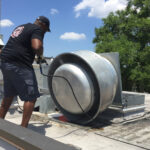
Rooftop exhaust fans remove grease-laden air from the building.
Improper maintenance can allow grease accumulation that increases fire risks.
Fire Suppression Systems
Automatic fire suppression systems protect cooking equipment during grease fires.
Modern commercial kitchens typically require UL 300-compliant wet chemical systems.
Inspection and Cleaning Requirements
NFPA 96 establishes inspection and cleaning schedules based on cooking volume and cooking methods.
How Often Should Restaurant Hood Systems Be Inspected & Cleaned?
One of the most common questions restaurant owners ask is:
How often does NFPA 96 require inspection & hood cleaning?
Typical inspection and cleaning intervals include:
| Cooking Operation | Cleaning Frequency |
| Solid fuel cooking | Monthly |
| High-volume cooking | Quarterly |
| Moderate-volume cooking | Semiannually |
| Low-volume cooking | Annually |
Restaurants using wood, charcoal, or heavy grease-producing equipment often require more frequent service.
The Cost of Non-Compliance
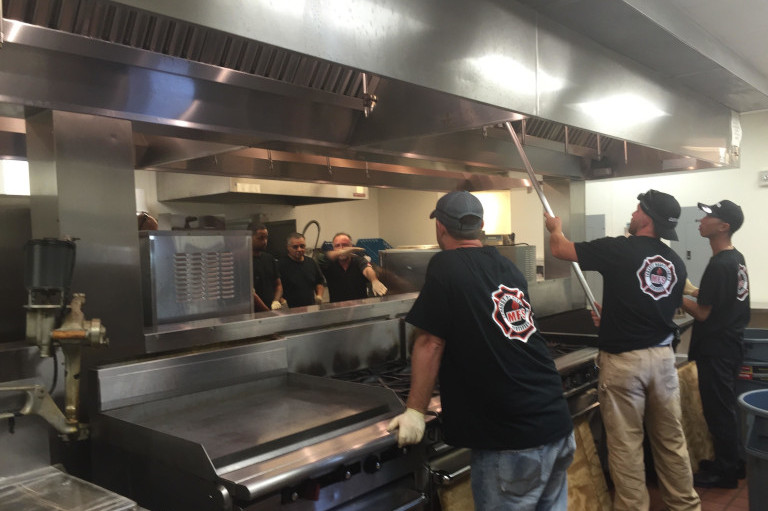
Ignoring NFPA 96 requirements can lead to serious consequences.
Common issues include:
- Failed fire inspections
- Fire code violations
- Business shutdowns
- Insurance claim denials
- Increased insurance premiums
- Property damage
- Employee injuries
- Loss of revenue
Many insurance companies require proof of proper maintenance and hood cleaning records.
Can a Restaurant Operate Without Fire Suppression?
No.
Commercial kitchens generally cannot legally operate without an approved fire suppression system.
Local fire codes often require:
- Automatic suppression systems
- Regular inspections
- Functional detection systems
- Updated service tags
Failure to maintain these systems can result in immediate violations.
What Is NFPA 96 and Why Is It Essential for Restaurant Owners?
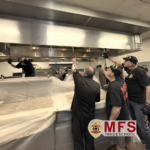
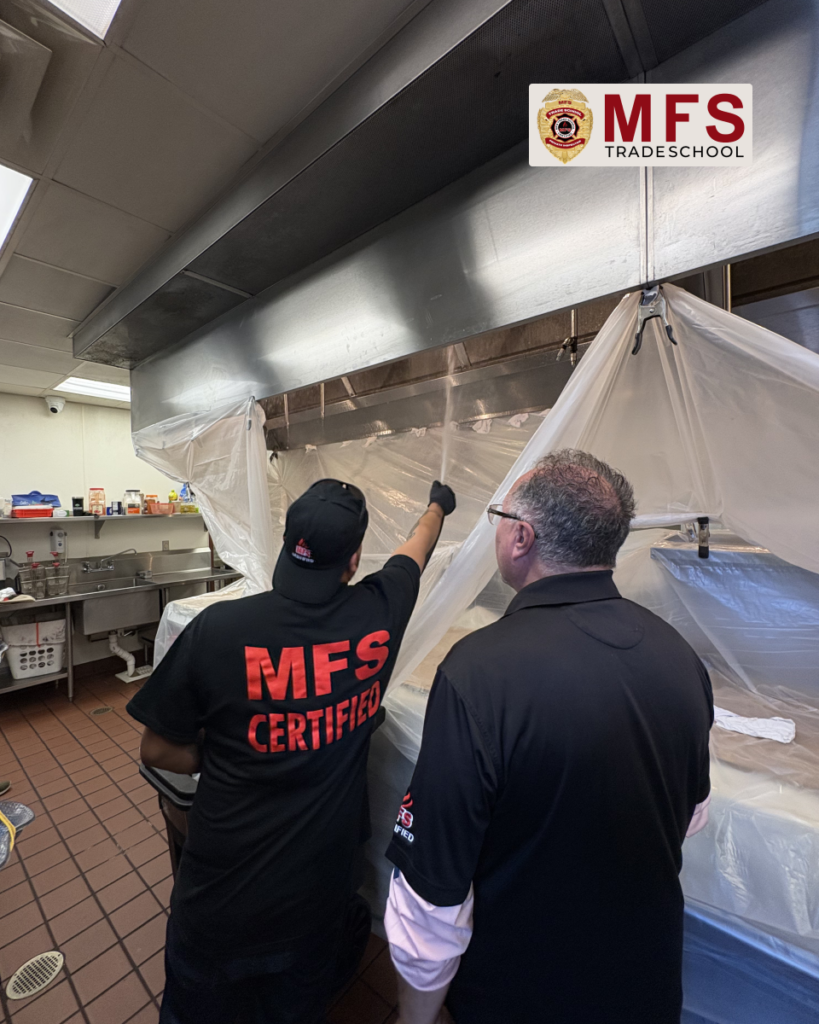
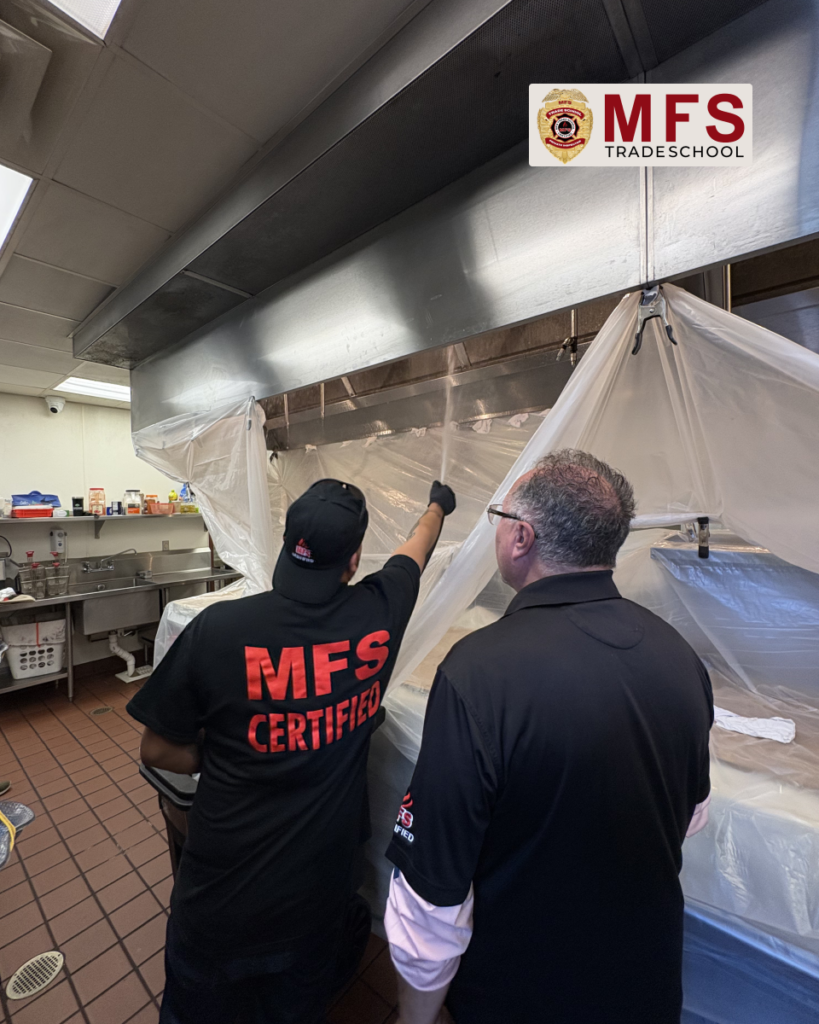
Professional kitchen exhaust cleaning removes combustible grease deposits throughout the entire system.
A complete cleaning by a professionally trained, qualified and Certified individual includes:
- Hood interiors
- Grease filters
- Grease ducts
- Exhaust fans
- Rooftop components
Cleaning only visible surfaces does not satisfy NFPA 96 requirements. Many fire marshals specifically inspect hidden areas where grease accumulates.
A great place to find certified hood cleaning companies is at the National Hood Cleaners Association as well as MFS Trade School.
Daily Maintenance Practices for Restaurants
Restaurant staff can support compliance through routine maintenance.
Daily responsibilities may include:
- Cleaning grease filters.
- Emptying grease containers.
- Wiping accessible hood surfaces.
- Checking fire extinguishers.
- Inspecting drip trays.
- Monitoring excessive grease accumulation.
Daily maintenance does not replace professional cleaning but helps reduce grease buildup between services.
Fire Suppression System Requirements
Modern commercial kitchens must maintain properly functioning fire suppression systems.
UL 300 systems are designed to:
- Suppress grease fires.
- Protect cooking appliances.
- Prevent fire spread.
- Reduce property damage.
Regular inspections ensure that systems activate properly during emergencies.
Benefits of NFPA 96 Compliance
Restaurants that maintain compliance often experience:
- Lower fire risks.
- Improved employee safety.
- Better insurance protection.
- Reduced liability.
- Successful inspections.
- Fewer operational disruptions.
Compliance also demonstrates a commitment to safety and professionalism.
Frequently Asked Questions
What is NFPA 96?
NFPA 96 is the national fire safety standard for commercial cooking ventilation and fire protection systems.
Why is NFPA 96 important?
It helps reduce fire risks, protect businesses, and ensure safe kitchen operations.
Does NFPA 96 require hood cleaning?
Yes. The standard establishes inspection and cleaning schedules based on cooking volume and grease production.
Can insurance companies require NFPA 96 compliance?
Yes. Many insurers require documentation of hood cleaning and maintenance.
How often should restaurant hoods be cleaned?
Cleaning frequencies range from monthly to annually depending on cooking operations.
Can restaurants fail inspections because of NFPA 96 violations?
Yes. Grease buildup, missing documentation, damaged equipment, and inadequate maintenance frequently lead to violations.
Ultimately, understanding what is NFPA 96 allows restaurant owners to protect employees, customers, and their investment while maintaining compliance with commercial kitchen fire safety standards.
Final Thoughts
NFPA 96 is one of the most important safety standards affecting commercial kitchens.
Restaurant owners who understand and follow these requirements significantly reduce fire risks, improve safety, and protect their businesses from costly interruptions.
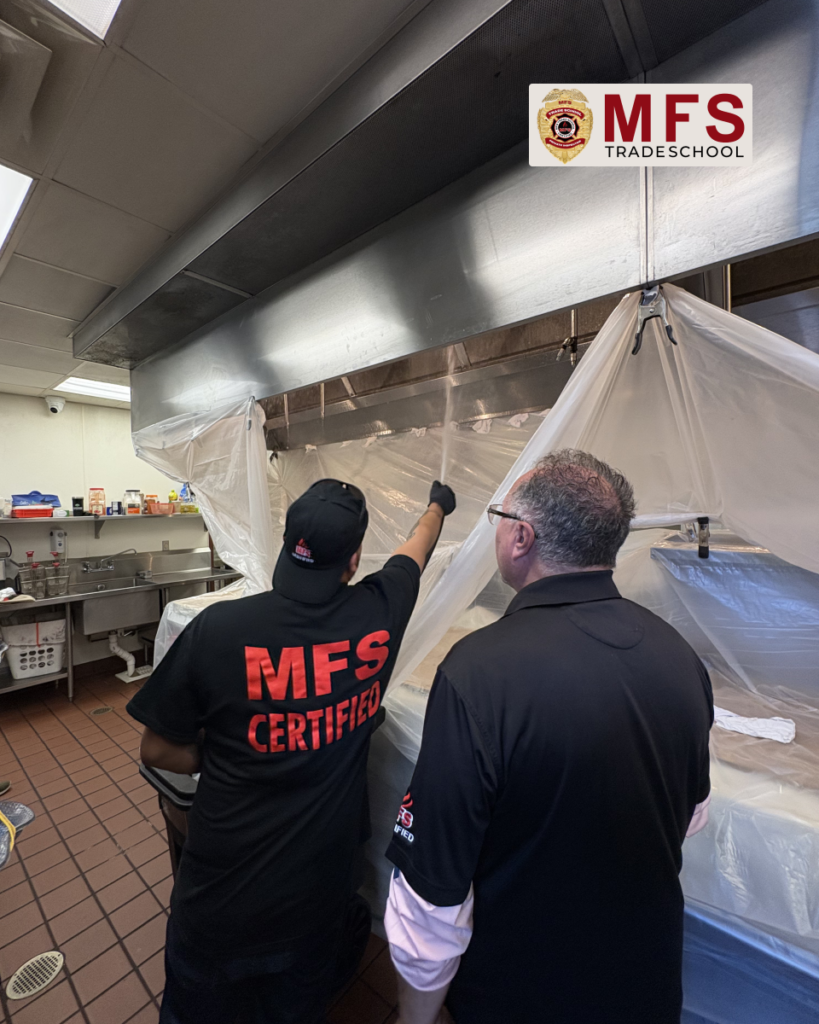
Regular hood cleaning by a Certified individual, proper fire suppression systems, documented maintenance, and ongoing inspections help restaurants remain compliant and operate safely.
For restaurant owners, NFPA 96 is not simply a fire code requirement—it is an essential part of protecting employees, customers, property, and long-term business success.