
Restaurant exhaust hood cleaning is one of the most important fire prevention practices in a commercial kitchen. Grease accumulation inside hoods, ducts, filters, and exhaust fans can create serious fire hazards, contribute to failed inspections, and increase operational and insurance risks.
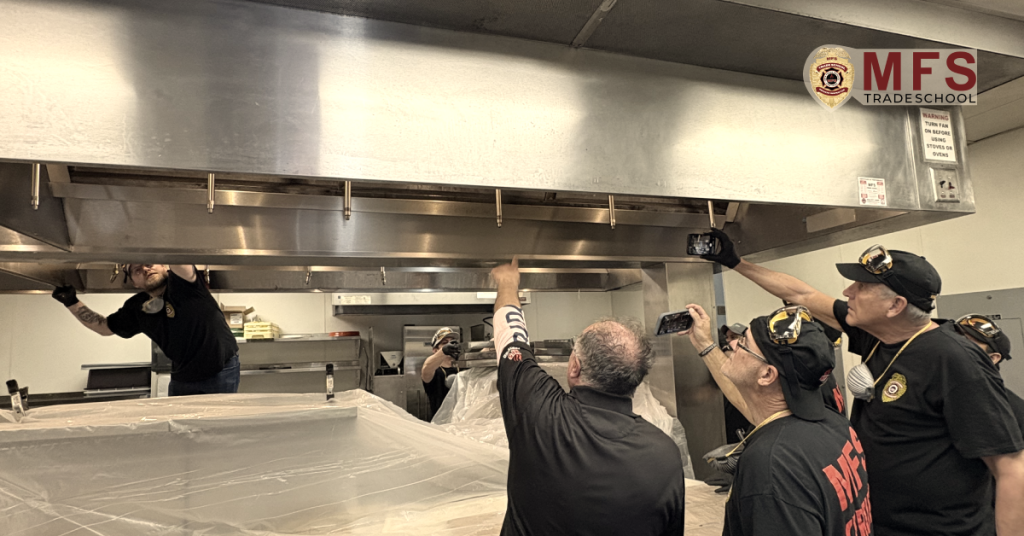
The answer to the question “How often should restaurant exhaust hoods be cleaned?” depends on several factors, including cooking volume, cooking methods, the type of fuel used, grease accumulation, and local fire code requirements.
Understanding the inspection and cleaning frequencies associated with NFPA 96 helps restaurant owners maintain safer commercial kitchens, reduce fire risk, and support compliance with applicable local requirements.
Quick Answer: How Often Should Restaurant Exhaust Hoods Be Cleaned?
According to NFPA 96, restaurant exhaust systems should generally be cleaned according to the following schedule:
| Cooking Operation | Cleaning Frequency |
| Solid-fuel cooking | Monthly |
| High-volume cooking | Quarterly |
| Moderate-volume cooking | Semiannually |
| Low-volume cooking | Annually |
These schedules may vary depending on grease accumulation, cooking equipment, and local fire code requirements.
Why Restaurant Hood Cleaning Matters
Commercial cooking equipment produces:
- Grease-laden vapors
- Smoke
- Heat
- Oil particles
- Combustible residues
Over time, grease accumulates inside:
- Kitchen hoods
- Grease filters
- Exhaust ducts
- Exhaust fans
If grease ignites, fire can spread rapidly through the ventilation system and into the building structure.
Regular exhaust hood cleaning helps:
- Reduce fire hazards.
- Improve airflow.
- Maintain equipment efficiency.
- Pass fire inspections.
- Protect insurance coverage.
- Extend equipment life.
What Does NFPA 96 Require?
NFPA 96 is the Standard for Ventilation Control and Fire Protection of Commercial Cooking Operations.
It addresses the inspection, maintenance, and cleaning of commercial kitchen exhaust systems and establishes frequency guidelines based on cooking activity and grease-producing operations.
Local fire departments, inspectors, insurance providers, and authorities having jurisdiction may reference NFPA 96 when evaluating commercial kitchen safety.
When grease deposits are found in a kitchen exhaust system, the affected portions of the system should be cleaned by properly trained and qualified personnel in accordance with applicable code requirements and the expectations of the authority having jurisdiction.
Restaurant owners should always verify which edition of NFPA 96 and which local fire code requirements apply in their jurisdiction.
Monthly Cleaning Requirements
Monthly cleaning is commonly associated with operations that use solid fuels or generate heavy smoke and grease deposits.
Examples may include:
- Wood-fired ovens
- Charcoal cooking
- Solid-fuel cooking equipment
- High-grease specialty cooking operations
Solid fuels can contribute to:
- Grease deposits
- Creosote buildup
- Ash accumulation
- Heavy combustible residue
These conditions can significantly increase fire risk and may require more frequent inspection and cleaning..
Quarterly Cleaning Requirements
Quarterly restaurant exhaust hood cleaning is often appropriate for high-volume commercial kitchens.
Examples include:
- Fast-food restaurants
- High-volume kitchens
- 24-hour restaurants
- Heavy frying operations
- Charbroiling operations
Because these kitchens produce large amounts of grease-laden vapors, exhaust systems may accumulate combustible residue more quickly.
Semiannual Cleaning Requirements
Semiannual cleaning is appropriate for:
- Full-service restaurants
- Moderate-volume kitchens
- Casual dining establishments
- Small restaurant operations
These kitchens produce moderate levels of grease accumulation.
Annual Cleaning Requirements
Annual cleaning may be sufficient for:
- Churches
- Seasonal facilities
- Community centers
- Daycare kitchens
- Senior centers
Low-volume operations typically accumulate grease at much slower rates.
Professional Hood Cleaning vs Daily Maintenance
Restaurant staff play an important role in reducing grease accumulation.
Daily maintenance tasks include:
- Cleaning grease filters.
- Wiping hood surfaces.
- Emptying grease containers.
- Cleaning drip trays.
- Inspecting visible grease buildup.
However, staff maintenance does not replace professional cleaning.
Professional hood cleaning includes:
- Interior hood cleaning.
- Duct cleaning.
- Exhaust fan cleaning.
- Rooftop grease removal.
- Hidden grease removal.
Only qualified technicians can access and clean the entire exhaust system.
Warning Signs Your Hood System Needs Cleaning
Even if your restaurant follows a regular schedule, increased cooking volume may require additional service.
Common warning signs include:
Smoke Escaping the Hood
Smoke leaving the cooking area instead of entering the hood often indicates restricted airflow.
Strong Grease Odors
Persistent odors may indicate grease buildup inside the ducts or fan system.
Grease Dripping from the Hood
Visible grease accumulation or dripping grease is a sign that cleaning is overdue.
Excessive Fan Grease
Rooftop exhaust fans coated with grease indicate significant buildup throughout the system.
Why Duct Cleaning Is Critical
Many restaurant owners focus only on the visible hood surfaces.
However, grease ducts present the greatest fire risk.
When grease ignites inside ductwork:
- Fire spreads rapidly.
- Flames can reach the roof.
- Structural damage can occur.
- Entire buildings may be affected.
Regular duct cleaning significantly reduces fire risks.
Rooftop Grease Containment Matters
Grease discharged from rooftop exhaust fans can:
- Damage roofing materials.
- Cause leaks.
- Create slip hazards.
- Lead to environmental issues.
Grease containment systems help protect roofs and reduce maintenance costs.
Professional cleaning companies often inspect and service rooftop containment systems during hood cleaning visits.
Inspection and Documentation Requirements
Fire marshals frequently inspect restaurant exhaust systems.
Inspectors commonly evaluate:
- Grease accumulation
- Cleaning labels
- Fire suppression systems
- Maintenance records
- Exhaust fan condition
- Grease filters
Restaurant owners should maintain:
No, only if they cook food. Cleaning frequency depends on cooking volume, equipment, and fuel type.
Can grease buildup cause a fire?
Yes. Grease accumulation inside ducts and exhaust fans is one of the leading causes of commercial kitchen fires.
Does daily filter cleaning replace professional hood cleaning?
No. Staff maintenance helps reduce grease buildup but does not replace full-system cleaning.
What happens if a restaurant fails a hood inspection?
Restaurants may receive violations, fines, increased insurance costs, or even temporary closures.
Final Thoughts
Restaurant exhaust hood cleaning is a critical part of commercial kitchen fire prevention.
Following NFPA 96 cleaning schedules helps restaurants reduce fire risks, improve safety, and maintain compliance.
Whether your operation requires monthly, quarterly, semiannual, or annual cleaning, maintaining the entire exhaust system—including the hood, ducts, filters, and exhaust fan—is essential.
Regular professional cleaning protects your employees, customers, property, and business operations while helping ensure your restaurant remains safe and compliant. Contact us for more information.