
Quick Answer: What Are the Signs Your Commercial Kitchen Hood Needs Cleaning?
The most common signs your commercial kitchen hood needs cleaning include grease dripping from the hood, persistent grease odors, smoke escaping into the kitchen, poor airflow, saturated filters, grease around duct access panels, and buildup around the rooftop exhaust fan.
These warning signs may indicate that grease has accumulated beyond the visible hood and into the plenum, ductwork, or exhaust fan. Addressing the problem early can help reduce fire hazards, improve ventilation, and keep your commercial kitchen prepared for inspections.
Why Commercial Kitchen Hood Cleaning Matters
A commercial kitchen exhaust system continuously removes heat, smoke, grease-laden vapors, and cooking contaminants from the kitchen.
Over time, grease can accumulate throughout the exhaust system, including:
- Hood canopies
- Grease filters
- Plenum chambers
- Horizontal and vertical ducts
- Duct access panels
- Rooftop exhaust fans
- Grease containment systems
Daily surface cleaning is important, but it does not remove grease hidden inside the complete exhaust system.
Recognizing hood cleaning warning signs early allows restaurant owners and facility managers to address grease accumulation before it becomes a larger fire-safety, ventilation, maintenance, or compliance problem.
Here are eight warning signs you should never ignore.
1. Strong Grease or Smoky Odors
One of the earliest signs your commercial kitchen hood needs cleaning can be an odor that remains even after cooking has stopped.
You may notice:
- Burnt grease smells
- Smoky odors
- Rancid oil smells
- Strong grease odors when the exhaust fan starts
- Odors that remain after the kitchen closes
Persistent odors may indicate grease accumulation inside the plenum, ductwork, or rooftop exhaust fan.
If normal restaurant cleaning does not eliminate the smell, consider having the complete exhaust system professionally inspected.
2. Visible Grease Buildup on the Hood
A light grease film can develop during normal cooking operations. Thick, dripping, or rapidly returning grease is different.
Warning signs include:
- Thick grease deposits
- Grease dripping from the hood
- Sticky residue around seams
- Overflowing grease cups
- Heavy buildup behind filters
- Grease returning shortly after routine cleaning
Visible buildup can indicate that additional grease has accumulated deeper inside the system.
This is why restaurant hood cleaning should address more than the stainless-steel surfaces visible from the cookline.
3. Smoke Is Escaping From the Hood
A properly operating commercial kitchen exhaust system should effectively capture smoke and cooking vapors.
Warning signs include:
- Smoke rolling back into the kitchen
- Smoke reaching the dining area
- Smoke accumulating near ceilings
- Poor capture above cooking appliances
- Increased smoke problems during peak service
Smoke escaping from the hood may be associated with clogged filters, grease accumulation, dirty exhaust components, or other airflow problems.
Because poor smoke capture can have several causes, a qualified professional should inspect the system rather than assuming that surface cleaning alone will solve the problem.
4. Poor Kitchen Airflow
Restaurant managers sometimes notice ventilation problems before they notice visible grease.
Common symptoms include:
- Higher kitchen temperatures
- Poor smoke capture
- Employees complaining about excessive heat
- Changes in pressure when opening doors
- Increased cooking fumes
- Reduced exhaust performance
A dirty kitchen exhaust system can restrict airflow and make ventilation components work harder.
However, poor airflow may also result from fan, belt, make-up air, filter, or HVAC issues. Professional inspection can help identify whether grease accumulation is contributing to the problem.
5. Dirty or Saturated Grease Filters
Grease filters are one of the first barriers between cooking equipment and the rest of the exhaust system.
Watch for filters that:
- Feel unusually heavy
- Remain sticky after washing
- Leak grease
- Have damaged baffles
- Contain excessive residue
- Become saturated unusually quickly
Routine filter cleaning helps control grease, but it does not replace complete commercial kitchen hood cleaning.
If filters repeatedly become saturated, grease may already be traveling deeper into the plenum and ductwork.
6. Grease Around Duct Access Panels
Grease stains around duct access doors, seams, or ceiling penetrations deserve attention.
These signs may indicate significant accumulation inside areas that restaurant employees cannot safely reach during normal kitchen maintenance.
Ductwork is particularly important because grease can collect in hidden sections of the exhaust system.
A trained kitchen exhaust cleaning professional can inspect accessible sections of the duct system and determine whether additional cleaning or corrective work is necessary.
7. Rooftop Grease Around the Exhaust Fan
The rooftop exhaust fan is one of the most frequently overlooked components of a commercial kitchen exhaust system.
Look for:
- Grease around the fan base
- Roof staining
- Saturated grease containment systems
- Oil or grease dripping onto roofing materials
- Heavy residue on fan components
- Strong grease odors near the exhaust discharge
Rooftop grease may indicate that grease has traveled through the exhaust system.
It can also create additional maintenance concerns by contaminating or potentially damaging roofing materials.
A complete kitchen exhaust cleaning should therefore consider the system from the hood through the ductwork to the exhaust fan.
8. Loud or Vibrating Exhaust Fan
Changes in exhaust fan operation can provide another warning that your system needs attention.
Restaurant owners may notice:
- Excessive vibration
- Grinding noises
- Belt squealing
- Rattling
- Reduced airflow
- Unusual startup noises
Grease accumulation on exhaust fan blades can affect balance and performance.
Unusual noise can also indicate worn belts, damaged bearings, or other mechanical problems. Professional cleaning gives technicians an opportunity to identify visible deficiencies that may require additional maintenance.
Why These Hood Cleaning Warning Signs Matter
Ignoring grease accumulation can create problems beyond appearance.
Potential consequences include:
- Increased fire hazards
- Reduced ventilation performance
- Additional equipment strain
- Rooftop grease contamination
- Failed inspections
- Insurance concerns
- Higher maintenance expenses
- More labor-intensive cleaning later
The longer heavy grease remains inside the exhaust system, the more difficult the eventual cleaning can become.
Proactive commercial kitchen hood cleaning is generally easier to manage than waiting until grease begins dripping, airflow deteriorates, or an inspector identifies a problem.
How Often Should Commercial Kitchen Hoods Be Cleaned?
Cleaning and inspection frequency depends on cooking volume, grease production, equipment, fuel type, and local fire code requirements.
NFPA 96 establishes inspection frequencies based on the type and volume of cooking operations.
| Kitchen Operation | Typical Inspection Frequency |
|---|---|
| Solid-fuel cooking | Monthly |
| High-volume cooking | Quarterly |
| Moderate-volume cooking | Semi-annually |
| Low-volume cooking | Annually |
Restaurants with significant grease production may require attention sooner if inspection identifies excessive accumulation.
Always follow the requirements established by your local Authority Having Jurisdiction (AHJ).
For a more detailed breakdown, read our guide: How Often Should Restaurant Exhaust Hoods Be Cleaned?
What Does Professional Hood Cleaning Include?
Professional commercial kitchen hood cleaning goes beyond wiping the visible stainless-steel canopy.
Depending on the exhaust system and service scope, cleaning may include:
- Hood canopy cleaning
- Grease filter cleaning
- Plenum cleaning
- Accessible horizontal and vertical duct cleaning
- Rooftop exhaust fan cleaning
- Grease containment inspection
- Before-and-after photographs
- Service documentation
- Cleaning/service label
- Reporting of identified deficiencies
Restaurant owners should always confirm the scope of work before selecting a contractor.
Documentation can also be valuable during fire inspections, insurance reviews, and facility audits.
Find Qualified Commercial Kitchen Hood Cleaning Professionals
Noticing one or more of these warning signs is a good reason to have your exhaust system evaluated rather than waiting for the next inspection.
The National Hood Cleaners Association (NHCA) provides restaurant owners and facility managers with educational resources about commercial kitchen exhaust cleaning, fire prevention, and NFPA 96 compliance.
Restaurant operators can also use National Hood Cleaners to connect with qualified professionals in their area and compare options for maintaining their commercial kitchen exhaust systems.
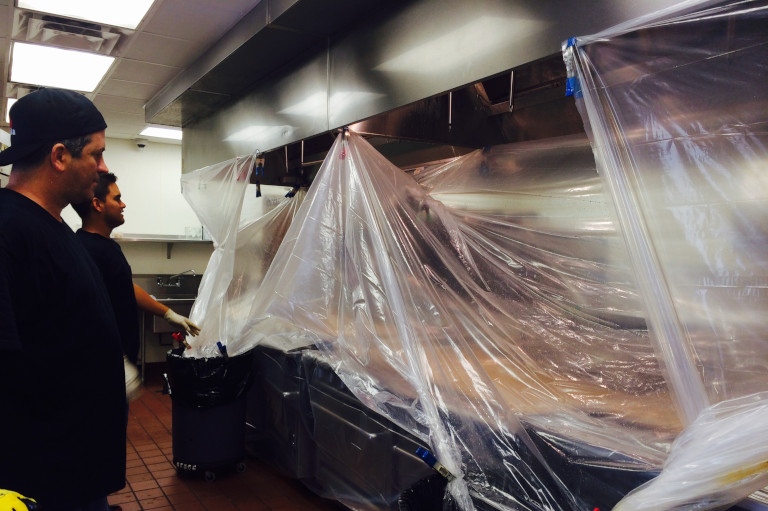
Need your exhaust system inspected or cleaned? Find a qualified kitchen exhaust cleaning professional through National Hood Cleaners and request quotes for your restaurant.
Interested in Learning Professional Kitchen Exhaust Hood Cleaning?
Restaurant owners are not the only audience interested in this industry.
For pressure washing contractors, commercial cleaners, restaurant service providers, facility maintenance professionals, and entrepreneurs, kitchen exhaust cleaning can provide an opportunity to add a specialized recurring commercial service.
MFS Trade School provides training and certification programs focused on professional kitchen exhaust hood cleaning.
Training opportunities include:
- Kitchen Exhaust Hood Cleaning Certification
- Kitchen Exhaust Hood Inspection Certification
- Online Training
- Three-Day Hands-On Training
Students learn practical skills related to commercial kitchen exhaust systems, cleaning procedures, equipment operation, safety, documentation, estimating, pricing, and the role NFPA 96 plays in commercial kitchen compliance.
Explore MFS Trade School’s Kitchen Exhaust Hood Cleaning Certification and training programs to learn how to perform professional exhaust cleaning and build a specialized commercial service business.
Frequently Asked Questions
What are the most common signs your commercial kitchen hood needs cleaning?
The most common warning signs include grease dripping from the hood, persistent grease odors, smoke escaping into the kitchen, poor airflow, saturated filters, grease around duct access panels, rooftop grease buildup, and unusual exhaust fan performance.
How do I know if my hood needs cleaning before the scheduled date?
Visible grease, persistent odors, poor smoke capture, saturated filters, rooftop contamination, and significant changes in cooking volume are reasons to have the system inspected before the next scheduled service.
Does a clean-looking hood mean the entire exhaust system is clean?
No. A hood can look clean from the cookline while grease remains inside the plenum, ductwork, access areas, and rooftop exhaust fan.
Can restaurant employees clean the entire hood system?
Restaurant employees can perform routine maintenance such as cleaning visible surfaces and removable grease filters. Complete kitchen exhaust cleaning involves areas such as the plenum, ductwork, and rooftop exhaust fan that generally require trained professionals and specialized equipment.
How often should a commercial kitchen hood be cleaned?
The appropriate schedule depends on cooking volume, fuel type, grease accumulation, inspection findings, and local requirements. NFPA 96 inspection frequencies commonly range from monthly for solid-fuel cooking operations to annually for certain low-volume operations.
What documentation should I receive after hood cleaning?
Depending on the provider and local requirements, documentation may include:
- Service report
- Cleaning certificate
- Before-and-after photographs
- Cleaning/service sticker
- Notes regarding inaccessible areas
- Identified deficiencies or recommended corrective actions
Final Thoughts
Recognizing the signs your commercial kitchen hood needs cleaning can help restaurant owners address grease accumulation before it becomes a larger fire-safety, ventilation, maintenance, or compliance concern.
Do not judge the condition of your exhaust system by the visible hood alone. Grease can accumulate inside filters, plenums, ducts, access areas, and rooftop exhaust fans where restaurant staff cannot easily see it.
If you notice grease buildup, persistent odors, smoke capture problems, poor airflow, saturated filters, rooftop grease, or unusual fan performance, consider having the complete system professionally inspected.
For restaurant operators, National Hood Cleaners can help you learn more about proper exhaust maintenance and connect with qualified kitchen exhaust cleaning professionals.
For contractors and entrepreneurs who see an opportunity in this essential commercial service, MFS Trade School provides hands-on and online training designed to develop the technical and business skills required to enter the kitchen exhaust hood cleaning industry.